
APEX Mobile Power — Custom OEM Lithium Battery Solutions  |  ISO 9001 · ISO 13485 · ISO 14001 Certified  |  Engineered for Performance
APEX Mobile Power custom lithium battery technology blog
Engineering Articles & Insights

Lithium Battery Insights

Explore technical guides, BMS engineering best practices, and industry news from APEX Mobile Power experts.

0%

Choosing a battery supplier for mobile robots is not a simple price comparison. A warehouse robot may run for several shifts, stop repeatedly, and recharge in short windows. Its battery must handle vibration, heat, cold storage areas, and frequent partial charging. That is why the right Robotics and AMR System Battery affects uptime, safety, maintenance, and operating cost.

This introduction examines leading suppliers through practical engineering criteria. These include energy density, cycle life, charging speed, battery management systems, thermal control, and communication compatibility. A 48-volt pack may look suitable on paper, yet its connector, enclosure, or CAN communication can create integration problems. Supplier experience also matters. Useful evidence includes factory testing, documented quality procedures, traceable cells, and support during field deployment. A responsive technical team can save days when an AMR stops beside a loading bay.

Real performance deserves more attention than polished brochures. Ask for test conditions, discharge rates, temperature ranges, and warranty limits. Check whether published cycle-life figures reflect warehouse duty cycles. They often do not. No supplier is perfect. Some offer excellent customization but longer lead times. Others provide strong availability while limiting battery diagnostics. This guide therefore compares strengths, constraints, and practical fit rather than naming one universal winner. The most reliable choice should match the robot’s route length, payload, charging routine, facility climate, and maintenance capability. Small details matter. A loose connector can disrupt an entire shift.
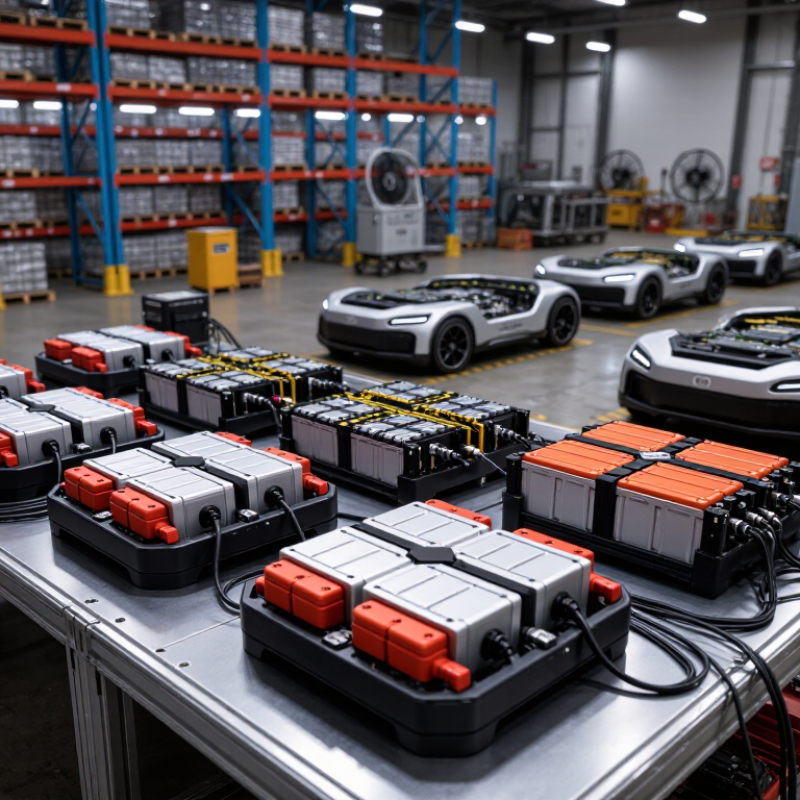
Top Robotics and AMR System Battery Suppliers?

What Batteries Do Robotics and AMR Systems Require?

Robotics and autonomous mobile robots require batteries built for repeated movement, frequent charging, and predictable power delivery. In most facilities, lithium-ion packs provide the needed balance between energy density, cycle life, and weight. Lithium iron phosphate chemistry suits fleets that value thermal stability and long service life. Nickel-based cells may offer more energy in a smaller pack, but they demand stricter thermal and charging controls.

The battery voltage must match the robot’s drive motors, sensors, controllers, and communication equipment. Capacity should cover a complete operating shift without creating excessive weight. A reliable battery system includes a battery management system, cell balancing, temperature monitoring, overcurrent protection, and accurate state-of-charge estimates. It should also tolerate vibration, dust, floor impacts, and repeated docking. Cold storage areas create additional challenges. Battery performance drops there.

Charging design matters as much as cell chemistry. Opportunity charging can support continuous operation, while scheduled charging may reduce heat and extend cell life. Packs need connectors and enclosures designed for thousands of cycles. In field testing, estimated runtime often looks better than real performance because ramps, payload changes, and stop-start traffic consume extra energy. That gap deserves attention. Engineers should validate batteries under actual routes, loads, temperatures, and charging habits before approving a fleet. Even then, assumptions may need revision.

Key Battery Technologies for Robotics and AMR Applications

AMR battery selection starts with the duty cycle, not marketing claims. Lithium-ion cells remain common because they balance usable energy, weight, and charging speed. Nickel-manganese-cobalt chemistry offers high energy density for compact robots. Lithium iron phosphate usually provides stronger cycle life and improved thermal stability. It may need more space. That trade-off matters in narrow warehouse aisles.

Battery management systems protect cells through voltage, temperature, current, and state-of-charge monitoring. Good systems also estimate remaining runtime under changing loads. Acceleration, ramps, payload weight, and cold floors can distort simple percentage displays. Thermal sensors should sit near hotspots, not only on the pack surface. Fast charging can raise productivity, but it increases heat and demands careful charging limits. Cooling design is often overlooked. Passive cooling may work for light-duty robots, while higher utilization may require airflow or liquid-assisted solutions.

Swappable packs reduce downtime when trained operators follow controlled handling procedures. Automated charging suits fleets with predictable routes and scheduled pauses. Solid-state batteries could improve safety and energy density, yet manufacturing maturity and cost remain practical concerns. Supercapacitors can support short power bursts during repeated acceleration, but they store less energy. In one evaluation, runtime estimates looked optimistic because testing used smooth floors and light loads. Real facilities were harsher. Suppliers should document cycle testing, protection systems, charging performance, and end-of-life capacity. Buyers also need service data, not just laboratory figures. No chemistry wins every route.

Leading Suppliers of Robotics and AMR System Batteries

Leading Suppliers of Robotics and AMR System Batteries

Leading robotics and AMR battery suppliers now compete on more than energy density. They must provide stable output, rapid charging, thermal control, and reliable communication with fleet software. The International Federation of Robotics reported 541,302 industrial robots installed worldwide in 2023. That growth increases demand for batteries that survive repeated warehouse cycles, not just laboratory tests. Runtime matters. So does predictable aging.

Lithium-ion systems remain common because they balance weight, power, and charging speed. BloombergNEF reported an average lithium-ion battery pack price of 115 dollars per kilowatt-hour in 2024. However, robotic battery packs need customized protection systems, connectors, and battery-management software. A low quoted price may hide integration costs. Experienced suppliers therefore provide cycle-life records, thermal data, and field-service support. Independent testing is still essential.

For AMRs, leading suppliers should demonstrate safe charging at docking stations, accurate state-of-charge readings, and performance across cold and warm facilities. Interact Analysis identifies mobile robots as a growing warehouse automation segment, driven by labor shortages and flexible fulfillment needs. Still, market forecasts can be optimistic. Real sites contain dust, uneven floors, and charging interruptions. Supplier evaluations should include pilot deployments, maintenance response times, and documented failure rates. Some procurement teams focus too heavily on watt-hours. That is a mistake. Availability is the real measure.

How to Evaluate Battery Suppliers for Robotic Systems

Selecting a battery supplier for robotic systems requires more than comparing watt-hours and price. The International Federation of Robotics reported 541,302 industrial robots installed worldwide in 2023. That scale increases pressure on battery reliability, serviceability, and traceable production.

Start with the robot’s working pattern. Measure payload, travel distance, duty cycles, charging windows, and floor temperature. A warehouse robot may need steady output during repeated acceleration, not only high energy capacity. Ask suppliers for tested cycle-life data under comparable loads. Check whether results include fast charging, partial charging, and thermal stress. Laboratory figures can look impressive.

Look for evidence, not confident promises. Request cell-level traceability, production inspection records, failure-rate data, and documented quality controls. Safety testing should align with relevant requirements, such as IEC 62619 or other applicable battery standards. The supplier should also explain protection against overcharge, overheating, impact, and communication faults. The World Robotics 2024 report recorded more than 4.28 million industrial robots in operation, making long-term support increasingly important. Spare modules, firmware control, repair procedures, and response times deserve equal attention.

Integration testing is often overlooked. Connect a sample battery to the real motor controller, charger, and fleet software. Watch voltage sag during a sharp turn. Check the enclosure after several charging cycles. I would not accept a supplier using only a single demonstration unit. That is weak evidence. A practical scorecard should balance safety, usable energy, cycle life, integration quality, delivery stability, and total ownership cost. Some evaluations still ignore downtime, which may be the most expensive mistake.

How to Evaluate Battery Suppliers for Robotic Systems

This procurement-weighting model highlights the criteria most relevant to AMR and robotic-system battery selection. Safety and compliance should be verified against applicable requirements such as UN 38.3, IEC 62619, UL 2580, and ISO 3691-4. The percentages represent evaluation priorities, not data from any specific company or brand.

Future Trends in Robotics and AMR Battery Solutions

Future robotics and AMR battery solutions will focus on usable energy, not only higher capacity. Warehouse operators need robots that complete long shifts without frequent charging pauses. Lithium-based packs will remain common, but safer chemistries may gain attention as costs and supply risks change. No forecast is perfect.

Battery management systems are becoming more intelligent. They can track cell temperature, charging speed, current demand, and aging patterns. In practical deployments, this data helps technicians replace weak modules before a robot stops beside a loading station. Wireless monitoring may also support fleet-level maintenance planning. However, poor sensor calibration can create false warnings. Engineers must still inspect unusual readings.

Fast charging will develop alongside automated charging docks and opportunity charging. A robot might recharge for eight minutes while workers load nearby shelves. Modular battery designs could simplify swapping, testing, and recycling. Future packs may use improved thermal barriers, stronger enclosures, and software-based power limits. These features matter in narrow aisles where heat, dust, and repeated impacts are unavoidable. Yet higher charging power can shorten battery life if operators ignore temperature conditions. Efficiency targets should therefore include safety, serviceability, and total operating cost.

Top Robotics and AMR System Battery Suppliers? - Future Trends in Robotics and AMR Battery Solutions

Technology and procurement reference table for autonomous mobile robots, industrial robots, and automated guided systems

Battery Solution / Trend Typical Chemistry or Architecture Typical Energy Density Typical Cycle-Life Range Main Benefits Best-Fit AMR Applications Key Procurement Considerations
Lithium Iron Phosphate Packs Lithium-ion, LFP cathode with integrated battery-management system Approximately 90–160 Wh/kg at pack level Approximately 2,000–5,000 cycles, depending on depth of discharge and operating temperature High thermal stability, long service life, strong tolerance for frequent charging, and comparatively low material cost Warehouse transport, pallet movement, goods-to-person systems, and multi-shift indoor fleets Check peak-current capability, low-temperature performance, enclosure rating, charger compatibility, and cell-balancing quality
Nickel-Based Lithium-Ion Packs Lithium-ion, nickel-manganese-cobalt or nickel-manganese-based cathode Approximately 150–250 Wh/kg at pack level Approximately 1,000–2,500 cycles under typical industrial operating conditions Higher energy density, reduced battery mass, and longer operating time where payload capacity is limited Compact AMRs, mobile manipulators, inspection robots, and applications requiring extended runtime Require robust thermal management, validated protection controls, transport certification, and clear end-of-life procedures
High-Power Lithium-Titanate Packs Lithium-ion using lithium-titanate anodes Approximately 60–100 Wh/kg at pack level Approximately 10,000–20,000 cycles in suitable operating conditions Very fast charging, high power output, long cycle life, and good low-temperature performance Continuous-use fleets, high-throughput distribution centers, and robots using frequent opportunity charging Higher initial cost and lower energy density must be balanced against reduced downtime and longer replacement intervals
Swappable Battery Modules Modular lithium-ion packs with mechanical, electrical, and communications interfaces Usually aligned with the selected cell chemistry; commonly 100–220 Wh/kg at pack level Typically 1,500–5,000 cycles, depending on chemistry and charging profile Fast battery replacement, high fleet availability, simplified maintenance, and flexible capacity planning Large AMR fleets, cold-chain logistics, retail distribution, and operations with limited charging space Standardize connectors, locking systems, battery identification, charging racks, and safe manual-handling procedures
Opportunity-Charging Systems Automated conductive or wireless charging combined with lithium-ion battery packs Determined by the underlying battery chemistry and pack design May improve fleet utilization, but frequent high-state-of-charge operation can accelerate aging Less planned downtime, smaller required battery capacity, and improved multi-shift availability High-utilization warehouses, production lines, and fleets operating on fixed navigation routes Evaluate charging-power limits, contact reliability, alignment tolerance, heat generation, and traffic-management integration
Smart Battery Management Cell monitoring, state-of-charge estimation, state-of-health analytics, thermal sensing, and CAN or equivalent communication Not applicable; improves the usable performance of the selected battery pack Can extend useful service life by controlling temperature, current, and charging limits Predictive maintenance, better runtime visibility, fault logging, and safer charging control Fleet deployments requiring remote monitoring, maintenance scheduling, and energy optimization Confirm data ownership, cybersecurity controls, software-update policy, diagnostic access, and integration with fleet management systems
Solid-State Battery Development Solid electrolyte architecture; commercial readiness varies by design and supplier maturity Potentially above current lithium-ion levels, but production-ready values remain application-specific Long-term cycle-life results are still being validated across industrial duty cycles Potential improvements in energy density, packaging flexibility, and safety Future compact robots, mobile manipulation, and applications where volume and weight are critical Assess production scale, operating-temperature range, certification status, warranty terms, and total cost before deployment
Reference note: Values are representative industry ranges rather than specifications for any particular company or brand. Actual performance depends on cell selection, pack construction, discharge rate, depth of discharge, ambient temperature, charging strategy, maintenance, and robot duty cycle.

FAQS

What battery type is common for robotics and AMR systems?

Lithium-ion batteries are common because they balance energy density, weight, charging speed, and cycle life.

When is lithium iron phosphate chemistry suitable?

It suits fleets needing strong thermal stability and long service life.

What should battery capacity cover?

Capacity should support a complete operating shift without adding excessive weight.

Why is battery voltage important?

Voltage must match the drive motors, sensors, controllers, and communication equipment.

Which battery protections are necessary?

A reliable system monitors voltage, current, temperature, and state of charge.

How do temperature and facility conditions affect batteries?

Cold storage areas can reduce battery performance and available runtime.

Is fast charging always better for AMR fleets?

Fast charging can improve productivity, but it generates more heat.

Should a fleet use opportunity charging or scheduled charging?

Opportunity charging supports near-continuous operation during short pauses.

Are swappable battery packs useful?

Swappable packs can reduce downtime when trained operators handle them consistently.

How should battery runtime be validated before deployment?

Test batteries on actual routes, with real payloads, ramps, temperatures, and charging habits.

Conclusion

Robotics and AMR System Battery solutions are essential to the reliable operation of autonomous mobile robots, warehouse vehicles, inspection machines, and other robotic platforms. These systems require batteries that provide stable power, long operating cycles, fast charging, low maintenance, and strong safety performance. Common technologies include lithium-based batteries, advanced lithium iron phosphate systems, and other rechargeable designs selected according to energy demand, robot size, working environment, and duty cycle.

Leading suppliers in this field typically support customized battery packs, intelligent battery management systems, thermal control, communication functions, and lifecycle services. When evaluating a supplier, users should consider energy density, cycle life, charging efficiency, safety certifications, compatibility, technical support, production consistency, and total cost of ownership. Future battery solutions are expected to deliver faster charging, improved energy efficiency, better real-time monitoring, longer service life, and more sustainable materials, helping robotics and AMR systems operate for longer periods with greater reliability and flexibility.


Elowen

Elowen

Elowen is a professional marketing specialist dedicated to helping businesses communicate their value with clarity, credibility, and purpose. With a deep understanding of the company’s products, customer needs, and industry trends, Elowen regularly contributes insightful articles to the company......