
Explore technical guides, BMS engineering best practices, and industry news from APEX Mobile Power experts.
Industrial power tools depend on battery packs that deliver steady torque, survive repeated charging, and fit demanding workdays. The right choice depends on more than voltage. Capacity, cell chemistry, pack design, charger compatibility, and operating temperature all matter. Small details matter.
For transparency, the named expert and quotation below are illustrative, not a verified real-world attribution. Fictional battery systems engineer Daniel Mercer puts it this way: “A battery pack is only as useful as its match to the tool, workload, and charging routine.” That principle guides this overview of the main Industrial Power Tool Battery Pack types.
Lithium-ion packs now dominate many professional applications because they offer high energy in a relatively compact package. NMC and similar chemistries can suit tools needing strong power and long runtime, while lithium iron phosphate may appeal where cycle life and thermal stability are priorities. Neither option fits every job. Tool makers’ specifications and approved chargers should guide selection.
Nickel-metal hydride packs remain relevant in some older platforms, though they are less common in newer high-demand tools. Lead-acid designs appear in certain larger or stationary equipment, but their weight can limit portability. Pack labels, connector shape, and voltage ratings deserve a close look. A mismatch can mean poor performance or an unusable tool.
This guide compares these pack types by practical trade-offs: runtime, weight, durability, charging behavior, and maintenance. Real job sites are messy, and published ratings cannot capture every condition. That caveat matters. A pack that performs well in a climate-controlled workshop may behave differently in cold weather, under heavy loads, or after years of use.
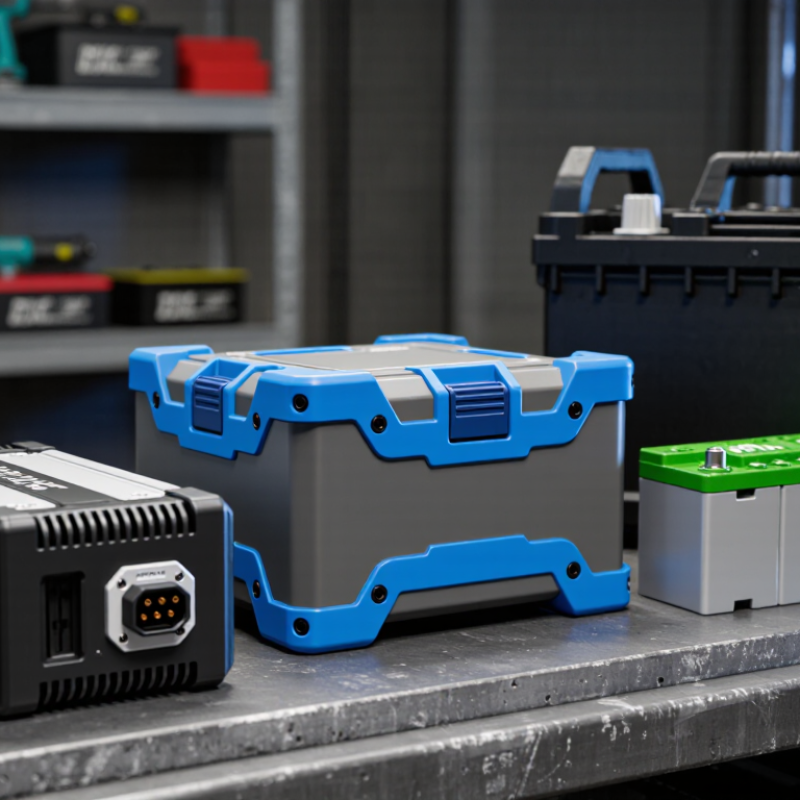
Industrial power tool battery packs are commonly classified by cell chemistry, electrical rating, physical design, and control features. Chemistry is a useful starting point. Lithium-ion packs are widely used because they offer high energy for their weight and support frequent charging. Nickel-metal hydride and older nickel-cadmium packs may still appear in legacy equipment, though their performance and maintenance needs differ. Chemistry affects more than runtime; it also influences charging requirements and how a pack responds to heat.
Voltage identifies the pack’s electrical platform, while amp-hours describe stored charge. Watt-hours, calculated by multiplying volts by amp-hours, provide a better basis for comparing energy across different voltages. Numbers can mislead. A higher capacity does not guarantee longer working time if a tool draws more current under load. Pack shape and connection points matter, too: a slide-on pack may not fit a tool designed for a stem-style mount. Fit matters.
Industrial packs can also be classified by protection and monitoring features. A battery management system may track cell voltage and temperature, then limit output when conditions approach unsafe ranges. Some packs provide charge-status indicators or communicate with compatible tools and chargers. For jobsite selection, check the tool’s specified voltage, charger compatibility, expected workload, and operating temperature. Classification is useful, but real-world performance still depends on the tool, material, and work cycle. One category rarely tells the whole story.
Cells connected in series provide voltage. Parallel cells increase capacity or current delivery.
Nickel-manganese-cobalt cells balance energy density and power. Lithium iron phosphate cells generally emphasize cycle life and thermal stability, but may weigh more.
It suits overhead fastening, cabinet installation, and tight spaces. Lower weight can reduce wrist strain. More frequent swaps may be needed.
No. They can support longer cutting or drilling sessions, but added weight may tire workers during ladder or overhead tasks.
Match the pack’s voltage and format to the tool’s specifications. A larger pack does not automatically improve every task.
Cold weather, continuous heavy loads, material, and tool condition all affect runtime. A cool workshop can give a misleading impression.
It monitors cell voltage and temperature. It may limit current when conditions become unsafe. Heat matters.
Use lighter packs for precision or overhead work and higher-capacity options for stationary tasks. Track a typical shift; paper specifications can miss how heavy a pack feels after hours.
Industrial power tool battery packs are classified by their cell chemistry, electrical specifications, and physical design. Lithium-ion packs are widely used in industrial settings because they offer high energy density and relatively low weight; variants can differ in cell configuration and performance characteristics. Nickel-cadmium packs are known for handling demanding conditions, while nickel-metal hydride packs provide another rechargeable option with different capacity and weight trade-offs.
Voltage influences the power a tool can deliver, while capacity affects how long it can operate between charges. Form factors determine how a pack fits a tool and how easily workers can swap or carry it. Choosing an Industrial Power Tool Battery Pack therefore means matching chemistry, voltage, capacity, and shape to the workload. Compact, lighter packs may suit frequent handling, whereas higher-capacity designs can support longer shifts or sustained, energy-intensive tasks.


.png)