
Explore technical guides, BMS engineering best practices, and industry news from APEX Mobile Power experts.
A Sodium-Ion Battery Module is a practical energy-storage unit built from multiple sodium-ion cells. These cells are connected to deliver usable voltage and capacity. The module usually includes busbars, sensors, insulation, structural housing, and a battery management system. In real equipment, these parts must work together under changing temperatures, charging rates, and electrical loads.
Sodium-ion technology replaces lithium ions with sodium ions during charging and discharging. Sodium is widely available, which may support more stable material supply chains. The chemistry can also perform reliably in selected low-temperature applications. However, performance depends strongly on the cell design. Energy density may remain lower than many established lithium-ion alternatives. That difference affects vehicle range, cabinet size, and total system weight.
A well-designed module monitors voltage, current, and temperature continuously. It can identify abnormal conditions before they become serious faults. Engineers also evaluate thermal management, mechanical vibration, cycle life, and end-of-life handling. Small details matter. A loose connection can create heat. Uneven cells can reduce usable capacity.
This article explains how a Sodium-Ion Battery Module is assembled, controlled, tested, and applied. It also examines where the technology appears promising and where expectations should remain realistic. Field results can differ from laboratory claims. That deserves attention. Reliable decisions require verified specifications, independent testing, and compliance with relevant transport and electrical safety standards. As the industry develops, sodium-ion modules may become valuable for stationary storage, backup power, and selected mobility systems. They are not a universal replacement. Careful application still matters.
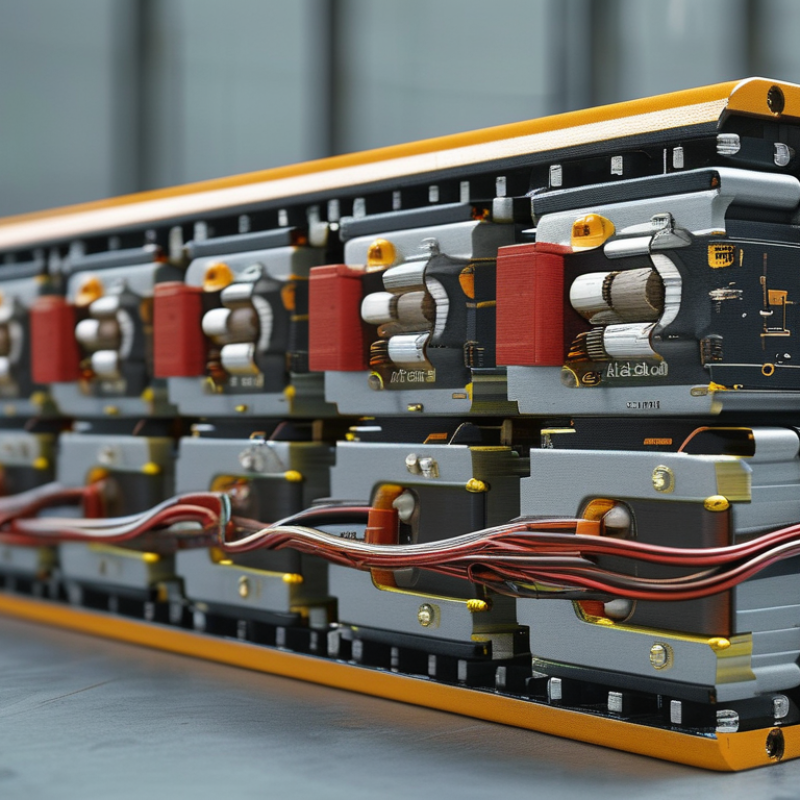
What Is a Sodium Ion Battery Module?
A sodium-ion battery module is an engineered unit containing several sodium-ion cells. These cells work together to deliver usable voltage and current. The module also includes electrical connections, insulation, structural supports, and monitoring components. Its core function is simple: store electrical energy and release it safely when required. In practice, a battery management system checks cell voltage, temperature, and charging conditions. It helps prevent excessive charging, deep discharge, and unsafe temperature changes. A strong enclosure protects the cells from vibration, moisture, and accidental contact. Small details matter.
The module acts as a building block within a larger energy storage system. Multiple modules may connect to supply power for backup equipment, renewable energy storage, or industrial applications. Sodium-ion chemistry uses sodium ions moving between electrodes during charging and discharging. This design can offer practical advantages where material availability and operating conditions are important. However, performance depends on cell design, temperature, charging control, and installation quality. Do not judge a module by capacity alone. Real-world output may change under heavy loads or cold conditions. My first assumption would be that every module behaves similarly, but testing often proves otherwise.
Tips: Check the rated voltage, usable capacity, operating temperature, and communication functions. Inspect cable connections regularly. Keep ventilation clear. Ask for test data, protection details, and service guidance before installation. A qualified technician should confirm system compatibility.
| Data Dimension | Typical Definition or Value | Core Function and Technical Notes |
|---|---|---|
| Basic Definition | An assembly of multiple sodium-ion cells connected electrically and mechanically within a protective enclosure. | A module combines individual cells into a practical voltage and capacity unit that can be integrated into a battery pack or energy-storage system. |
| Electrochemical Carrier | Sodium ions (Na+) move between the cathode and anode during charging and discharging. | The reversible movement of sodium ions stores and releases electrical energy. The electrolyte provides an ion-conducting path, while the external circuit carries electrons. |
| Common Cell Arrangement | Series and parallel combinations, such as 8S, 12S, 16S, or other configurations selected for the required voltage and capacity. | Series-connected cells increase voltage. Parallel-connected cells increase ampere-hour capacity and current capability. |
| Nominal Cell Voltage | Approximately 2.3–3.0 V per cell, depending on the chemistry and operating voltage window. | The module voltage is determined mainly by the number of cells connected in series. Actual charge and discharge limits must follow the cell manufacturer's specifications. |
| Module Voltage | Common practical ranges include approximately 12 V, 24 V, 48 V, or higher-voltage configurations. | The module provides a standardized electrical building block for low-voltage systems, battery packs, backup power, and stationary storage equipment. |
| Energy Capacity | Calculated as: Energy (Wh) = Nominal Voltage (V) × Capacity (Ah). | Energy capacity indicates how much electricity the module can store under specified test conditions. Usable energy is lower than nominal energy because operating limits and reserve margins must be maintained. |
| Typical Cell Energy Density | Approximately 90–160 Wh/kg for many current sodium-ion cell designs; values vary by chemistry, format, and production method. | Sodium-ion cells generally provide lower gravimetric energy density than many mainstream lithium-ion cells, but they can offer advantages in material availability, low-temperature performance, and cost potential. |
| Module-Level Energy Density | Typically lower than cell-level energy density because of the enclosure, busbars, insulation, sensors, cooling components, and battery-management hardware. | Module-level energy density reflects the actual system packaging efficiency and is more useful than cell-level energy density when comparing complete battery assemblies. |
| Main Cell Components | Cathode, anode, separator, electrolyte, current collectors, casing, and safety vent or protection features. | These components enable sodium-ion transport, electron collection, electrical insulation, chemical stability, and controlled pressure relief during abnormal conditions. |
| Typical Cathode Families | Layered metal oxides, polyanionic compounds, and Prussian blue or Prussian white analogues. | The cathode chemistry affects voltage, energy density, cycle life, thermal behavior, power capability, and material cost. |
| Typical Anode Materials | Hard carbon is widely used; other anode materials may be used in research or specialized designs. | The anode stores sodium ions during charging and releases them during discharge. Its structure strongly influences first-cycle efficiency, rate capability, and service life. |
| Battery Management System (BMS) | Electronic monitoring and control system for cell voltage, module current, temperature, state of charge, and fault conditions. | The BMS balances cells, limits overcharge and over-discharge, controls allowable current, records operating data, and disconnects the module when unsafe conditions are detected. |
| Cell Balancing | Passive or active balancing, depending on module design and performance requirements. | Balancing reduces voltage differences between series-connected cells, helping to maintain usable capacity, improve consistency, and reduce the risk of cell overstress. |
| Thermal Management | Natural convection, forced-air cooling, conductive cooling, or liquid cooling may be used. | Thermal management keeps cells within their permitted temperature range, limits temperature differences, and supports safe charging, discharging, and service life. |
| Operating Temperature | A common design target is approximately −20°C to 55°C for discharge, while charging often requires a narrower range. | Actual limits depend on cell chemistry and module design. Charging at very low temperatures may require current reduction or preheating to prevent degradation or lithium-like plating risks associated with the specific electrode system. |
| Cycle Life | Often designed for approximately 2,000–5,000 full-equivalent cycles, depending on depth of discharge, temperature, charge rate, and end-of-life criteria. | Cycle life measures how many charge-discharge cycles the module can complete before its capacity or power capability falls below the specified threshold. |
| Charge and Discharge Rate | Common designs may support approximately 0.5C to 2C, with higher rates possible in specialized cells. | The C-rate expresses current relative to rated capacity. For example, 1C theoretically charges or discharges the rated capacity in about one hour, subject to voltage, temperature, and control limits. |
| Power Capability | Determined by cell internal resistance, parallel count, thermal design, BMS limits, and permitted C-rate. | Power capability indicates how quickly the module can deliver or absorb energy. It is especially important for backup power, peak shaving, regenerative applications, and motor-assisted systems. |
| Safety Protection | Cell monitoring, over-voltage protection, under-voltage protection, over-current protection, short-circuit protection, and temperature protection. | These safeguards reduce the likelihood of damage caused by electrical faults, abnormal temperatures, excessive current, or operation outside the permitted voltage window. |
| Mechanical Structure | Cells, busbars, brackets, insulation, enclosure, terminals, sensors, and service or mounting features. | The structure maintains cell alignment, protects against vibration and impact, provides electrical insulation, supports heat transfer, and enables reliable installation. |
| Electrical Connections | Positive and negative terminals, series busbars, parallel links, sensing wires, communication lines, and protective disconnects. | The connections transfer power between cells and external equipment while allowing the BMS to measure and control individual cell groups. |
| Communication Interfaces | May include CAN, RS-485, or other system-level communication interfaces. | Communication allows the module to report voltage, current, temperature, state of charge, alarms, and fault information to a charger, inverter, vehicle controller, or energy-management system. |
| State of Charge (SOC) | Estimated remaining charge expressed as a percentage from 0% to 100%. | SOC estimation supports charge control, discharge scheduling, runtime prediction, and protection against operation outside the recommended energy window. |
| State of Health (SOH) | Estimated condition of the module relative to its original capacity, resistance, or power performance. | SOH helps identify aging, predict maintenance needs, and determine whether the module remains suitable for its intended application. |
| Primary Advantages | Sodium is widely available, sodium-ion systems can reduce dependence on certain critical materials, and some designs provide good low-temperature power performance. | These characteristics make sodium-ion modules promising for stationary storage, backup systems, short-range mobility, and applications where cost, resource availability, and temperature tolerance are important. |
| Primary Limitations | Lower energy density than many lithium-ion alternatives, a developing supply chain, and chemistry-dependent differences in voltage, efficiency, and cycle life. | The module may require more space or weight for the same stored energy, so application selection should consider power demand, installation area, operating temperature, and total system cost. |
| Typical Applications | Stationary energy storage, renewable-energy buffering, backup power, telecommunications power, low-speed electric vehicles, and selected industrial systems. | The module stores electricity and delivers it when needed, helping to balance supply and demand, provide backup power, reduce peak demand, or support electrically powered equipment. |
| Core Function Summary | Store electrical energy electrochemically and deliver controlled DC power at a usable voltage and capacity. | A sodium-ion battery module converts electrical energy into chemical energy during charging and converts it back into electrical energy during discharge, while the enclosure and BMS provide electrical integration, monitoring, protection, and thermal control. |
| Important Design Qualification | All values are representative engineering ranges rather than universal specifications. | Final voltage, capacity, temperature limits, C-rate, safety features, cycle life, and communication requirements must be confirmed from the specific sodium-ion cell and module design documentation. |
: It is a unit containing connected sodium-ion cells, sensors, insulation, and structural supports. It stores electricity. The module releases power when connected to a suitable load.
Sodium ions move between the electrodes during charging and discharging. During charging, ions pass through the electrolyte and separator. Electrons move through the external circuit. The process reverses during discharge.
It can support backup equipment, inverters, motors, and renewable energy systems. Several modules can connect for higher voltage or capacity. System compatibility still requires technical confirmation.
It monitors cell voltage, current, temperature, and charging conditions. It can reduce output or disconnect the circuit during abnormal operation. Small voltage differences matter. Ignoring them may create larger problems later.
No. Safety depends on cell quality, enclosure design, insulation, software, and installation. Protection systems can limit overcharging, deep discharge, and excessive heating. Chemistry alone does not prove safety.
Energy density is often lower than some established battery chemistries. A larger enclosure may be needed for the same stored energy. Cold conditions and heavy loads can also reduce practical output. The simple capacity number may mislead.
Some designs perform well at lower temperatures. Actual results depend on cell construction and operating limits. Check the specified temperature range before installation. Cold performance is not guaranteed.
Keep ventilation openings clear and leave space around the enclosure. Inspect connectors for looseness, discoloration, or heat marks. Check rated voltage, usable capacity, and communication functions. A qualified technician should confirm compatibility.
Ask for test data, protection settings, operating limits, and service guidance. Review cell balance results, not only total module voltage. Independent testing is valuable. Laboratory results may not match a dusty, poorly ventilated cabinet.
A Sodium-Ion Battery Module is an integrated energy storage unit that combines multiple sodium-ion cells with electrical connections, monitoring systems, structural supports, and protective components. Its core function is to store electrical energy and deliver it reliably to equipment or power systems. During charging, sodium ions move from the positive electrode to the negative electrode through an electrolyte, while electrons travel through the external circuit. During discharge, this process reverses, producing usable electrical power.
A typical module includes battery cells, busbars, sensors, a battery management system, insulation, cooling or heat-dissipation parts, and a protective enclosure. Important performance characteristics include energy capacity, power output, cycle life, charging efficiency, operating temperature range, and safety stability. Compared with some other battery technologies, sodium-ion systems can benefit from widely available raw materials and reduced dependence on scarce resources. They may serve stationary storage, backup power, low-speed transportation, and renewable-energy applications. However, lower energy density, developing supply chains, and ongoing improvements in manufacturing remain important limitations.



.png)