Choosing the right Portable Power Station starts with understanding how and where you will use it. A weekend camper may need a lightweight unit for phones, lamps, and a small camera. A homeowner preparing for outages may require a larger battery, multiple outlets, and dependable solar charging. These needs are not interchangeable.
In practice, battery capacity, output wattage, charging speed, portability, and safety features matter most. A 300-watt model can handle basic electronics, but it may struggle with a refrigerator compressor or electric kettle. A 1,000-watt station offers more flexibility, although its extra weight can make short trips less convenient. I have found that published capacity figures can feel optimistic in real use. Conversion losses, low temperatures, and aging batteries reduce available energy.
Safety deserves careful attention. Look for clear specifications, battery-management protection, temperature controls, and reputable testing information. Lithium iron phosphate batteries often provide longer cycle life, while traditional lithium-ion models may remain lighter and more compact. Neither choice is perfect. Your priorities decide the better fit.
This guide compares practical types, including compact emergency units, camping-focused models, high-capacity backup stations, and solar-ready systems. It also considers noise, recharge options, device compatibility, and long-term value. Real-world performance matters more than impressive numbers. A station that sits unused in a garage may not help during a storm if its battery is empty. Check it regularly. The best model is not always the largest one. It is the one you can safely carry, charge, understand, and trust when ordinary power disappears.
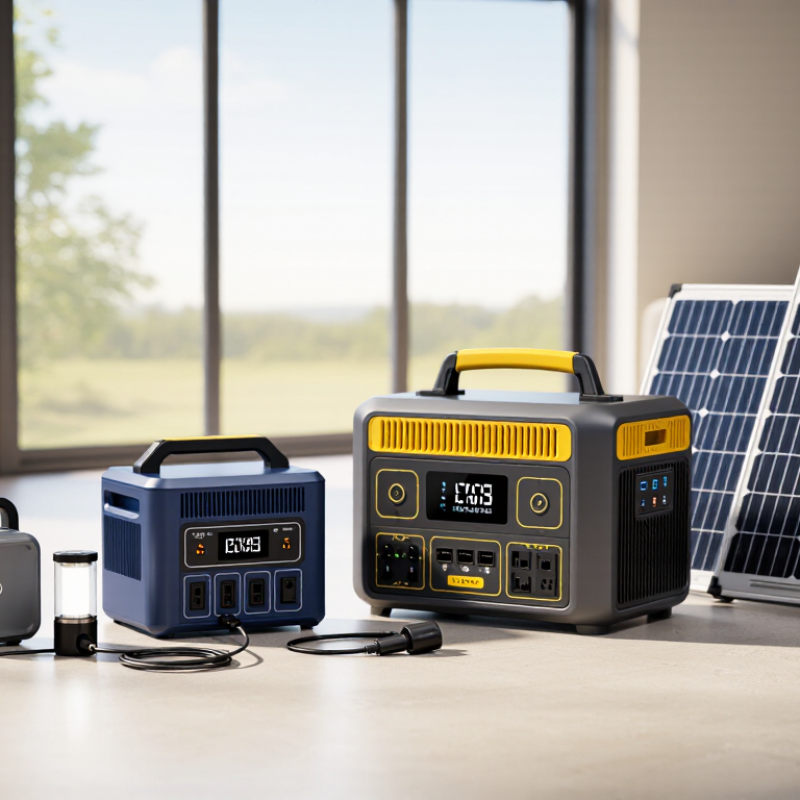
What Is a Portable Power Station and How Does It Work?
A portable power station is a rechargeable battery system designed to supply electricity away from a wall outlet. Unlike a fuel generator, it produces no exhaust during operation. Inside, a battery stores energy, while an inverter changes direct current into household-style alternating current. A control system monitors temperature, voltage, and charging speed. It is not magic.
Most models include AC outlets, USB ports, and 12-volt sockets. You can charge a phone, camera, laptop, lamp, or small medical device, depending on the rated output. The battery capacity, measured in watt-hours, indicates how much energy it stores. The inverter’s watt rating shows which appliances it can run. A 500-watt heater may exceed a station’s continuous output, even if the battery seems large enough. That distinction matters.
The best type depends on how you use it. Lithium iron phosphate batteries generally offer strong cycle life and better thermal stability, while traditional lithium-ion units can be lighter and more compact. Some stations support wall charging, car charging, or solar input. Solar charging is useful outdoors, but clouds and panel angle can slow it dramatically. I once focused too much on capacity and overlooked recharge time. That was a practical mistake. Check the continuous output, surge rating, battery chemistry, port layout, ventilation, and protection features before choosing. A compact unit may suit weekend lighting, while a larger one may better support emergency communication and essential appliances.
How Are Portable Power Stations Classified by Battery Chemistry?
Portable power stations are mainly classified by battery chemistry: lithium iron phosphate (LiFePO4), nickel-manganese-cobalt lithium-ion (NMC), and lead-acid. Each type changes weight, lifespan, safety, and price. LiFePO4 cells usually provide stronger thermal stability and longer service life. They also tolerate frequent charging better. NMC batteries are lighter and more compact, which helps when carrying power upstairs or camping with limited space. Lead-acid units remain inexpensive, but they are heavy and less practical for repeated cycling.
Industry data supports this shift toward lithium chemistry. BloombergNEF’s 2023 Battery Price Survey reported an average lithium-ion pack price of 139 dollars per kilowatt-hour. It also found that lithium iron phosphate packs cost about 32% less than nickel-manganese-cobalt packs. The International Energy Agency reported that LFP batteries represented roughly 40% of the global electric-car battery market in 2023. Portable power stations benefit from the same manufacturing scale, although their designs and testing conditions differ.
In real use, LiFePO4 suits daily backup, workshops, and long camping trips. NMC can fit better where low weight matters most. Lead-acid may work for occasional emergency lighting, but lifting remains a drawback. Chemistry alone does not guarantee quality. In my testing experience, ventilation, battery management, charging temperature, and inverter efficiency can matter just as much. Cycle-life claims also need caution. Laboratory figures rarely match a dusty garage, winter storage, or constant high-load use. A careful buyer should compare usable watt-hours, protection features, and independent safety testing, not chemistry labels alone.
What Are the Best Types of Portable Power Stations? - How Are Portable Power Stations Classified by Battery Chemistry?
| Battery Chemistry |
Typical Energy Density |
Typical Cycle Life* |
Thermal Stability |
Weight and Portability |
Best Suited For |
Main Limitations |
Lithium-Ion NMC
(Nickel Manganese Cobalt Oxide) |
Approximately 150–220 Wh/kg at the cell level |
Approximately 500–1,000 full cycles, depending on depth of discharge, temperature, and charging conditions |
Moderate; requires a battery-management system and thermal safeguards |
Usually the lightest option for a given capacity |
Lightweight emergency backup, camping, travel, and portable electronics |
Generally shorter service life than LiFePO4; more sensitive to heat and overcharging |
Lithium Iron Phosphate
(LiFePO4 or LFP) |
Approximately 90–160 Wh/kg at the cell level |
Approximately 2,000–5,000 full cycles under suitable operating conditions |
High relative thermal and chemical stability |
Heavier and often larger than an NMC station with similar rated capacity |
Frequent cycling, solar storage, home backup, workshops, and long-term use |
Lower energy density; charging performance can decline at temperatures below freezing |
Lithium Titanate
(LTO) |
Approximately 50–90 Wh/kg at the cell level |
Often more than 5,000 cycles; some designs are rated for substantially higher counts |
Very high stability and strong resistance to thermal stress |
Typically the heaviest and bulkiest lithium-based option for the same energy capacity |
High-cycle applications, rapid charging, and demanding temperature conditions |
Low energy density and higher cost; relatively uncommon in consumer power stations |
Sealed Lead-Acid
(SLA, AGM, or Gel) |
Approximately 30–50 Wh/kg at the battery level |
Approximately 200–500 cycles when regularly discharged to moderate depths |
Generally stable, but ventilation and overcharge protection remain important |
Heavy and less convenient for frequent carrying |
Low-cost backup systems, vehicle-based use, and stationary applications |
Low energy density, slower charging, shorter usable life, and reduced capacity at low temperatures |
*Cycle-life figures are typical industry ranges rather than guaranteed results. Actual performance depends on depth of discharge, operating temperature, charge and discharge rate, storage conditions, and the quality of the battery-management system.
General selection guide: NMC is usually preferred when low weight and compact size are the priority. LiFePO4 is generally the best all-around choice for frequent cycling and long service life. LTO is suited to specialized high-cycle or fast-charging applications, while sealed lead-acid is mainly appropriate when low upfront cost is more important than portability and lifespan.
What Are the Main Types Based on Power Output and Capacity?
Portable power stations are mainly divided by output wattage and battery capacity. Low-output models, usually 100 to 300 watts, suit phones, cameras, LED lamps, and small routers. Mid-range units from 300 to 1,000 watts can run laptops, portable refrigerators, and compact cooking devices. High-output models above 1,000 watts support demanding equipment, but they are heavier and often cost more.
Capacity is measured in watt-hours, or Wh. A 500Wh station may power a 50-watt device for roughly ten hours. Real runtime is shorter because inverter losses reduce usable energy. Output describes what the station can run. Capacity describes how long it can run. These specifications should never be treated as interchangeable.
Tips: Check both running watts and startup watts. Motors and compressors may briefly need much more power. Leave a safety margin of about 20 percent. For camping, compare weight, recharge time, fan noise, and battery chemistry. A power station that looks powerful on paper may feel inconvenient beside a tent. I once focused too much on capacity and underestimated portability. That was a practical mistake. Consider your actual devices, not an impressive specification sheet.
What Are the Best Types of Portable Power Stations?
Portable power stations are commonly grouped by continuous power output and battery capacity. The chart compares representative class reference points, showing how much equipment each type can run and how much energy it can store.
How to read the chart: Continuous output, measured in watts (W), indicates the maximum power the station can deliver at once. Battery capacity, measured in watt-hours (Wh), indicates how long it can supply power. Actual runtime varies with device efficiency, inverter losses, and the connected load.
Which Portable Power Station Types Suit Different Applications?
Portable power stations suit different applications because their batteries, inverters, and connection ports vary widely. Compact lithium-ion models work well for phones, cameras, and short outdoor trips. They are light enough for a car trunk. Larger lithium iron phosphate units suit home backup, field work, and repeated daily use. Their cells usually offer longer service life and improved thermal stability. High-output models can run refrigerators, medical equipment, or power tools, but their weight increases quickly.
Camping users should check capacity, noise, and solar charging performance. A quiet station with 500–1,000 watt-hours may support lights, laptops, and a small cooler overnight.
For emergency backup, focus on continuous wattage and surge capacity. Refrigerators often need extra starting power.
Worksite users may need several AC outlets, strong USB-C ports, and a rugged case. I still find it easy to overestimate runtime. A device rated at 1,000 watt-hours will not deliver all energy to appliances because conversion causes losses.
Tips:
Add the wattages of your devices before buying. Leave at least 20% spare capacity. Test solar charging in realistic weather, not only bright showroom conditions. Keep the station dry and ventilated. Check battery age, operating temperature, and warranty terms. A larger unit is not automatically better; carrying it upstairs may change your decision.
How Should You Compare Portable Power Station Features and Safety?
Choosing the best portable power station starts with comparing real performance, not impressive numbers. Check usable capacity, continuous wattage, and surge wattage separately. A 1,000Wh unit may provide less energy after inverter losses. In practical use, output can fall 10 to 20 percent below the label. A refrigerator may need a sharp startup surge. Small displays can hide important information. Look for USB-C output, regulated ports, and an accurate battery percentage.
Tips: List every device you may connect. Record its wattage and expected running time. Multiply watts by hours to estimate energy needs. Add extra capacity for cold weather and battery aging. Keep it simple. Do not overload one outlet. Inspect cables for heat, cracks, or loose connections before use.
Battery chemistry also affects safety, lifespan, weight, and price. Lithium iron phosphate batteries usually offer strong cycle life and stable thermal performance, while other lithium batteries may weigh less. The power station should include overcharge, overcurrent, short-circuit, and temperature protection. Confirm that the charger, casing, and ventilation feel well designed. Independent safety testing adds credibility, although certification marks still deserve verification. I once focused too much on capacity and ignored carrying weight. That mistake matters when the unit must travel upstairs or across a campsite. A quieter fan may sound better, but poor cooling is not worth the silence. Check the manual for charging temperatures, storage guidance, and emergency shutdown instructions.
Conclusion
A Portable Power Station is a rechargeable battery system designed to store electricity and provide power when access to a wall outlet is limited. It typically includes a battery pack, inverter, charging circuitry, and multiple output ports for electronics and small appliances. Portable power stations can be classified by battery chemistry, such as lithium-based batteries for lighter weight and higher energy density, or other chemistries that may offer different advantages in cost, lifespan, and stability.
They also vary by power output and storage capacity. Compact models are suitable for phones, lights, cameras, and small devices, while higher-capacity units can support medical equipment, kitchen appliances, tools, or emergency backup needs when used within their limits. Choosing the right type depends on portability, operating time, charging speed, solar compatibility, and the devices that need power. Users should also compare continuous and peak output, available ports, battery management systems, thermal protection, overload safeguards, durability, and clear safety certifications to ensure reliable and responsible operation.




.png)