
APEX Mobile Power — Custom OEM Lithium Battery Solutions  |  ISO 9001 · ISO 13485 · ISO 14001 Certified  |  Engineered for Performance
APEX Mobile Power custom lithium battery technology blog
Engineering Articles & Insights

Lithium Battery Insights

Explore technical guides, BMS engineering best practices, and industry news from APEX Mobile Power experts.

0%

Choosing the 2026 Best Custom LiFePO4 Battery Pack Supplier requires more than comparing prices or catalog capacity. A dependable supplier should understand your equipment, operating environment, charging profile, and daily energy demand. The right pack may power a marine system, solar cabinet, mobility device, or industrial backup unit. Each application needs different cells, battery management settings, enclosure materials, connectors, and testing procedures.

Jeff Dahn, a respected lithium-ion battery researcher, once said, “The battery is the most important part of an electric vehicle.” His point applies beyond vehicles. Battery quality influences operating time, thermal stability, maintenance costs, and user confidence. A serious Custom LiFePO4 Battery Pack supplier should provide traceable cell sourcing, documented protection parameters, capacity testing, and practical engineering support. It should also explain limitations honestly.

Look for evidence.

Ask for test records, not promises. Check whether the supplier performs charge-discharge testing, balancing verification, insulation checks, and low-temperature protection tests. Confirm communication protocols when the pack uses CAN, RS485, or another interface. A supplier with real field experience can identify problems before production, such as insufficient peak current, poor connector selection, or an enclosure that traps heat.

Still, no supplier is perfect. Specifications can look convincing on paper and fail under vibration, cold weather, or repeated cycling. That is why sampling, pilot testing, and design review remain essential. The best supplier is not simply the cheapest factory. It is a transparent technical partner that can improve the design when evidence demands it.
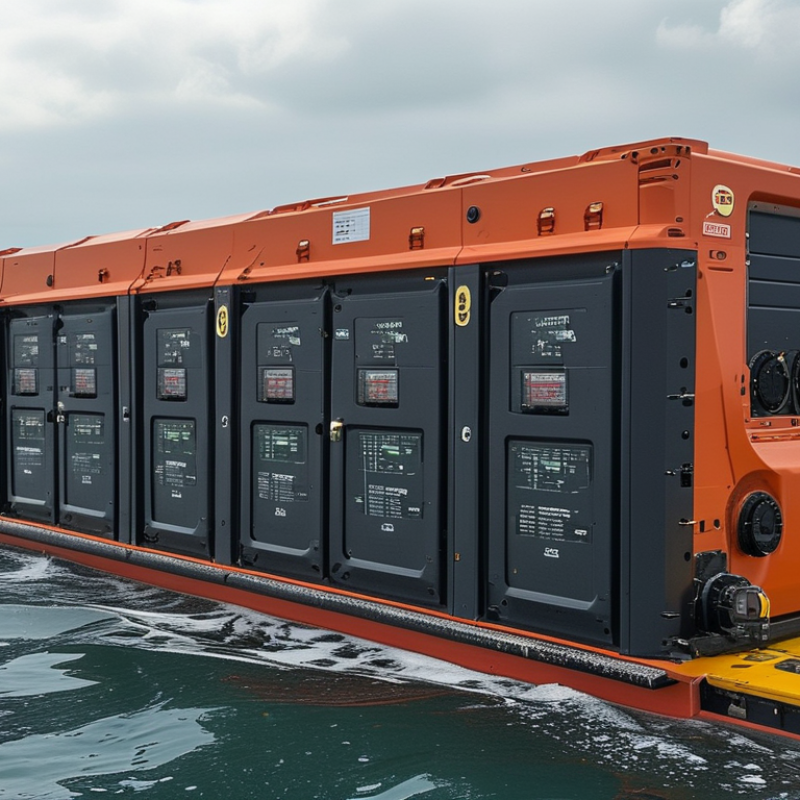
2026 Best Custom LiFePO4 Battery Pack Supplier?

What Defines a Leading Custom LiFePO4 Battery Pack Supplier in 2026

What Defines a Leading Custom LiFePO4 Battery Pack Supplier in 2026

A leading custom LiFePO4 battery pack supplier is more than a low-price assembler. It understands load profiles, installation limits, charging habits, and real operating temperatures. The International Energy Agency’s Global EV Outlook 2024 reported that LFP batteries represented about 40% of the global electric vehicle battery market in 2023. This growth reflects stronger cost and safety advantages, but customization still requires engineering discipline. Data beats promises.

Experienced suppliers begin with verified cell traceability and measurable design controls. They should provide capacity testing, cycle-life evidence, BMS communication details, and thermal performance records. BloombergNEF’s 2024 Battery Price Survey placed the average lithium-ion pack price at 115 dollars per kWh. Lower prices can help, yet cheap components may increase replacement risks. A reliable supplier explains that trade-off clearly.

Safety documentation must match the application, not decorate a sales file. Look for relevant testing under UN 38.3, IEC 62619, and applicable regional requirements, with documented change control. A serious partner also supports prototypes, sample validation, production audits, and after-sales diagnosis. No supplier is flawless. The better ones admit design limits, revise weak assumptions, and report field feedback honestly. That practical transparency often separates a dependable custom battery partner from a factory offering only attractive specifications.

2026 Best Custom LiFePO4 Battery Pack Supplier?

What Defines a Leading Custom LiFePO4 Battery Pack Supplier in 2026

A capable custom supplier should support multiple series configurations, accurate voltage design, battery-management integration, thermal protection, and application-specific certification. The chart uses the standard 3.2 V nominal voltage and 3.65 V maximum charging voltage of a LiFePO4 cell.

Reference basis: typical LiFePO4 cell electrical characteristics; pack voltage varies with cell tolerance, state of charge, temperature, and BMS settings.

How to Evaluate LiFePO4 Battery Pack Quality, Safety, and Performance

2026 Best Custom LiFePO4 Battery Pack Supplier?

A reliable LiFePO4 supplier should prove quality with measured data, not polished claims. The IEA’s Global EV Outlook 2024 reported more than 750 GWh of global battery demand in 2023, a 40% increase from 2022. This growth makes traceability and process control increasingly important.

Ask for cell records, capacity reports, resistance readings, and production-batch identification. Check whether testing uses realistic temperatures and charge rates. A claimed 4,000-cycle life means little without test conditions. The battery management system should provide overcharge, over-discharge, short-circuit, and temperature protection. It should also record faults clearly. Small details matter.

Safety needs independent evidence. Confirm compliance with UN 38.3 transport testing and IEC 62619 requirements for industrial lithium batteries. Review thermal-abuse, vibration, crush, and insulation tests where relevant. The pack enclosure should resist moisture, movement, and cable damage during installation. The IEA also notes that battery demand is expanding rapidly, increasing pressure on materials and manufacturing capacity. That pressure can create rushed inspections.

Do not trust one sample alone. Request repeat samples from different batches. Compare voltage balance after storage. Check connector torque and BMS communication under load. A supplier may pass laboratory tests yet struggle with production consistency. That uncomfortable gap deserves attention. No evaluation is perfect, but documented evidence is stronger than confidence.

Which Customization Options Meet Different Application Requirements

2026 Best Custom LiFePO4 Battery Pack Supplier?

Choosing a custom LiFePO4 battery pack begins with the application, not a catalog capacity. A compact medical cart may need 12.8V and 100Ah. An outdoor monitoring station may require 25.6V, 50Ah, and low-temperature charging protection. Space, weight, current peaks, runtime, and recharge time should be measured together. Real sites differ. A perfect specification rarely exists.

Useful customization includes cell configuration, enclosure shape, mounting points, connectors, cable length, and communication protocols. The BMS can match continuous current, startup surges, balancing needs, and temperature limits. For cold environments, charging should stop below the approved cell temperature range. For dusty sites, sealed housing and suitable ingress protection can reduce failures. Never assume a higher Ah rating solves every problem.

An experienced supplier should provide electrical drawings, sample testing, traceable cells, and documented safety checks. Capacity testing, insulation checks, vibration review, and BMS fault tests can reveal weaknesses before shipment. Transport documents and applicable regional requirements also need verification. In field projects, connector placement has caused more trouble than expected. A beautiful pack is useless if technicians cannot service it. Measure twice. A pilot batch can expose design problems under real loads. Small compromises may remain, but they should be recorded rather than hidden.

2026 Best Custom LiFePO4 Battery Pack Supplier? - Which Customization Options Meet Different Application Requirements

Application Requirement Typical Nominal Voltage Common Capacity Range Recommended Cell Configuration Recommended BMS Functions Key Customization Options Typical Continuous Discharge Environmental Design Relevant Safety or Compliance Considerations
Residential Solar Energy Storage 12.8 V, 25.6 V, 51.2 V 100 Ah–400 Ah per battery module 4S, 8S, or 16S LiFePO4 cells Cell overvoltage and undervoltage protection;
overcurrent and short-circuit protection;
temperature monitoring;
state-of-charge estimation;
passive or active balancing
CAN or RS485 communication Parallel operation Wall or floor enclosure Heating option for cold climates 50–200 A, depending on capacity and inverter requirements Indoor or outdoor enclosure; approximately 0–45°C charging and −20–60°C discharging, subject to cell and BMS specifications Electrical isolation, battery disconnect, enclosure ingress protection, inverter compatibility, and applicable stationary battery standards
Electric Golf Cart or Low-Speed Vehicle 25.6 V, 38.4 V, 51.2 V 100 Ah–300 Ah 8S, 12S, or 16S High-current discharge control;
regenerative-braking overvoltage protection;
temperature sensing;
low-voltage cutoff;
SOC display or Bluetooth monitoring
Drop-in battery dimensions Anderson-style connector Vibration-resistant mounting Fuel-gauge display 100–300 A peak capability may be required; continuous current must be matched to the motor controller Shock- and vibration-resistant case; protected terminals; charging temperature control Controller and charger compatibility, mechanical retention, overcurrent protection, and vehicle electrical-system requirements
Marine Electronics and Trolling Motor 12.8 V or 25.6 V 50 Ah–300 Ah 4S or 8S Low-temperature charge cutoff;
short-circuit protection;
cell balancing;
SOC and voltage monitoring;
configurable discharge limits
Water-resistant enclosure Corrosion-resistant terminals Low-profile form factor External monitoring port 50–200 A, based on motor thrust and peak load Sealed or gasketed housing; corrosion-resistant hardware; thermal protection; installation above bilge-water level Marine electrical practices, isolation from conductive surfaces, secure mounting, and protection against moisture and salt exposure
Portable Power Station 12.8 V, 25.6 V, or 51.2 V internal battery system 20 Ah–200 Ah 4S, 8S, or 16S Compact protection circuit;
USB and DC output management;
thermal monitoring;
charge control;
accurate SOC estimation
Custom dimensions Integrated handles LED or LCD indicator USB-C PD interface Modular service design 20–150 A continuous, depending on inverter rating Ventilated indoor-use enclosure or protected portable housing; thermal cutoff for high-load operation Battery transport classification, charger compatibility, fuse coordination, creepage and clearance, and product-level electrical safety testing
Electric Wheelchair or Mobility Scooter 12.8 V, 25.6 V, or 51.2 V 20 Ah–150 Ah 4S, 8S, or 16S Reliable low-voltage cutoff;
overcurrent protection;
temperature protection;
cell balancing;
charger communication where required
Lightweight enclosure Custom connector State-of-charge indicator Anti-vibration construction 30–150 A peak, depending on motor and ramp requirements Compact, impact-resistant housing; protected terminals; charging lockout outside the permitted temperature range Mobility-device electrical safety, charger matching, secure mounting, electromagnetic compatibility, and user-accessible protection
Robotics, AGV, and AMR Equipment 25.6 V, 38.4 V, 51.2 V, or higher system voltages 20 Ah–200 Ah 8S, 12S, 16S, or series-connected modules CAN communication;
current and voltage logging;
SOC and state-of-health estimation;
pre-charge control;
thermal monitoring;
event reporting
Custom dimensions Hot-swappable design Robotic connector Data logging Fast-charge profile 50–300 A, with short-duration peak current specified by the drive system Vibration-resistant enclosure; forced-air or passive cooling; optional heating for automated warehouses Functional safety assessment, emergency-stop integration, connector interlock, EMC testing, and protection against regenerative current
Telecommunication Backup Power 48 V nominal, commonly implemented as 51.2 V LiFePO4 50 Ah–200 Ah per module 16S Remote monitoring;
parallel-module coordination;
overvoltage and undervoltage protection;
thermal management;
SOC and alarm reporting
19-inch rack format Front-access terminals SNMP or Modbus gateway Parallel expansion 50–200 A per module, matched to the rectifier and backup load Indoor rack or cabinet installation; controlled ventilation; optional low-temperature heating DC distribution protection, rack fire-safety design, alarm integration, grounding, and applicable telecom backup-power requirements
Industrial UPS and Backup Systems 51.2 V, 102.4 V, or higher system voltage 50 Ah–500 Ah per module 16S or multiple series-connected modules High-accuracy current measurement;
redundant temperature sensing;
contactor control;
pre-charge circuit;
event records;
master-slave communication
Rack or cabinet integration Contactor and fuse assembly CAN, RS485, or Ethernet gateway Service disconnect 100–500 A, determined by UPS power and DC-bus voltage Industrial cabinet; forced-air cooling where required; controlled operating temperature and service access Short-circuit coordination, electrical isolation, emergency shutdown, UPS communication protocol, and system-level certification
Solar Street Lighting 12.8 V or 25.6 V 20 Ah–100 Ah 4S or 8S Overcharge and overdischarge protection;
dusk-to-dawn load control interface;
temperature monitoring;
low standby consumption
Pole-mounted case Integrated connector Low-temperature cutoff Custom mounting bracket 10–50 A, depending on lamp power and startup current Outdoor weather-resistant enclosure; UV-resistant materials; drainage and condensation control Solar charge-controller compatibility, outdoor ingress protection, lightning and surge considerations, and secure pole mounting
Medical and Laboratory Equipment 12.8 V, 25.6 V, or application-specific voltage 10 Ah–100 Ah 4S or 8S, with custom series-parallel arrangements where required Precise voltage and temperature monitoring;
controlled charge termination;
low-noise protection electronics;
SOC reporting;
redundant safety cutoff
Low-noise BMS Sterilizable or cleanable enclosure Custom medical connector Battery identification memory 10–100 A, based on equipment load and inrush current Indoor controlled environment; low-temperature charging protection; sealed surfaces where cleaning is required Risk management, electrical isolation, leakage-current control, connector protection, traceability, and applicable medical-device requirements
Light Electric Vehicle and Utility Cart 25.6 V, 38.4 V, or 51.2 V 50 Ah–300 Ah 8S, 12S, or 16S High-current protection;
regenerative-braking management;
temperature sensing;
CAN communication;
service disconnect control
Automotive-style enclosure Crash-resistant mounting Pre-charge circuit Custom busbars 100–400 A peak, depending on motor-controller specifications Vibration and shock resistance; protected cooling path; sealed connectors; defined operating temperature range Vehicle-level EMC, electrical protection, fuse and contactor selection, charger compatibility, and mechanical safety validation
Technical values are typical design ranges. Final voltage, capacity, current rating, enclosure, BMS settings, and compliance requirements should be confirmed against the specific load, charger, inverter, operating environment, and applicable regulations.

How Suppliers Manage Design, Prototyping, Testing, and Production

A reliable custom LiFePO4 battery pack supplier starts with the application, not a catalog cell. Engineers define voltage, capacity, peak current, temperature range, enclosure size, and communication needs. The IEA’s Global EV Outlook 2024 reported that electric-car battery demand reached nearly 750 GWh in 2023. That growth increases pressure on suppliers to control every design detail.

Good suppliers use prototypes to expose weak assumptions. They test cell matching, busbar heating, BMS balancing, vibration resistance, and charging behavior. A physical prototype should survive repeated charge-discharge cycles before production tooling begins. Testing should reference standards such as IEC 62619 and UL 1973, where applicable. BloombergNEF’s 2024 Battery Price Survey placed the average global pack price at 115 dollars per kWh. Lower cost helps, but rushed validation can create expensive failures. Real experience matters here. Some early designs simply look perfect on paper.

Tips: Request test reports, traceable cell records, and clear acceptance limits. Ask how suppliers handle capacity variation and thermal alarms. Review prototype changes in writing. Production should include incoming inspection, automated welding checks, insulation tests, BMS verification, and end-of-line capacity testing. Independent sampling adds confidence. Still, no process is flawless. Field data may reveal temperature or aging patterns that laboratory tests miss. Good suppliers keep measuring after shipment.

What to Check Before Choosing a Long-Term Battery Pack Partner

2026 Best Custom LiFePO4 Battery Pack Supplier?

Choosing a long-term battery pack partner requires more than comparing unit prices. Start with cell traceability, production records, and documented quality controls. A dependable supplier should explain where cells come from and how incoming materials are tested. Ask for capacity reports, resistance data, and batch identification. Vague answers are warning signs.

The battery management system deserves close attention. Confirm its protection limits, balancing method, temperature sensors, and communication options. Request test results for overcharge, short circuit, vibration, and temperature changes. Check whether testing covers your real working conditions, not only a laboratory standard. A sample pack should run through your expected charge and discharge cycle. Measure it yourself.

Look beyond the first shipment. Review warranty terms, replacement procedures, engineering response time, and change-control policies. Can the supplier maintain the same cell grade six months later? Can it support tooling changes without hiding new costs? I have seen attractive prototypes fail because cable routing was ignored. Small details matter. Ask for a pilot order, inspect the assembly process, and discuss realistic lead times. A perfect supplier rarely exists. Clear records, honest limitations, and consistent communication usually matter more than impressive promises.

FAQS

: What makes a custom LiFePO4 battery supplier reliable?

: A reliable supplier studies load profiles, charging habits, installation space, and operating temperatures. Data matters more than promises.

How can cell quality be verified?

Request cell traceability, batch numbers, capacity reports, and resistance measurements. Every pack needs an identity.

What battery management system details should buyers check?

Check protection limits, balancing methods, temperature sensors, and communication options. Ask how faults are recorded.

Should a sample battery be tested before ordering?

Yes. Run the sample through your expected charge and discharge cycle. Measure performance yourself.

Which safety documents are important?

Request applicable testing records for transport, industrial battery safety, and regional requirements. Documents should match the application.

How should thermal performance be evaluated?

Test the pack at expected temperatures and charging loads. A cool laboratory result proves little.

Why should buyers inspect production and cable routing?

Poor cable routing can cause strain, heat buildup, or difficult maintenance. Small details become expensive later.

What should a long-term agreement include?

Review warranty coverage, replacement procedures, response times, and change-control rules. Pricing is only one part.

How can buyers recognize unrealistic promises?

Be cautious when a supplier avoids limitations, testing evidence, or batch records. Perfect claims deserve reflection.

Is the cheapest supplier usually the best choice?

Not always. Lower prices may hide weaker components and higher replacement risks. Cheap can become costly.

Conclusion

Choosing the best Custom LiFePO4 Battery Pack supplier in 2026 requires more than comparing prices. A leading supplier should combine strong battery engineering, reliable cell selection, consistent manufacturing, and a clear understanding of different application needs. Buyers should evaluate pack quality through capacity consistency, cycle life, thermal performance, protection systems, structural design, and documented safety testing. Flexible customization is also essential, including voltage, capacity, dimensions, connectors, communication functions, enclosure materials, charging requirements, and installation methods.

A dependable supplier should support the complete development process, from technical consultation and design verification to prototyping, performance testing, certification preparation, and scalable production. Before forming a long-term partnership, review quality-control procedures, traceability, delivery capability, warranty terms, technical support, and communication standards. The right supplier will provide transparent documentation, practical engineering solutions, stable production performance, and continuous support throughout the battery pack’s service life.


Elowen

Elowen

Elowen is a professional marketing specialist dedicated to helping businesses communicate their value with clarity, credibility, and purpose. With a deep understanding of the company’s products, customer needs, and industry trends, Elowen regularly contributes insightful articles to the company......